عربي
 English
 Español
 Português
 한국어


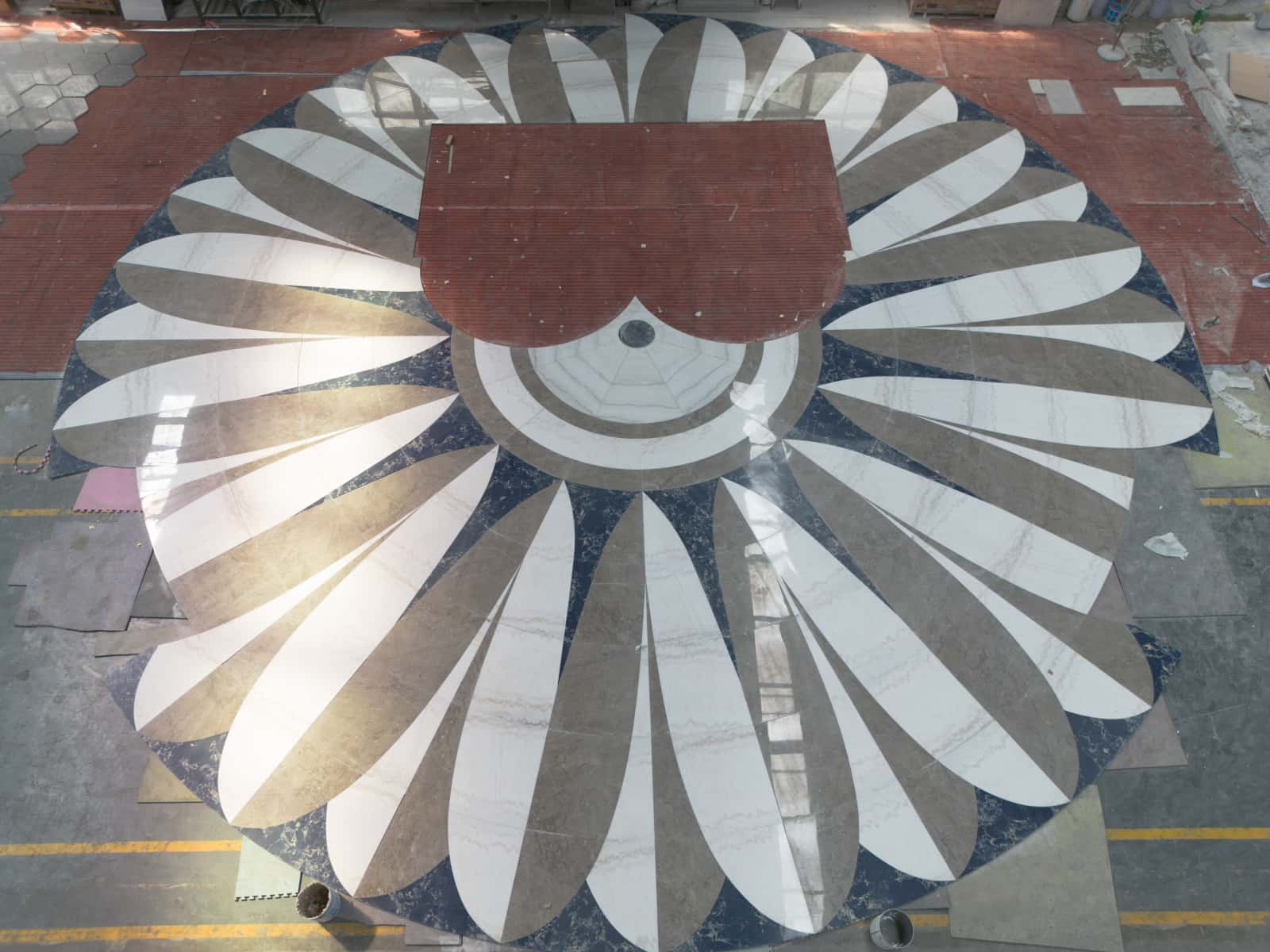
White and grey-brown pieces spread outward in a petal pattern, with deep blue-toned stone between them. These photographs show Aoli Stone’s waterjet marble floor inlay laid out in the workshop before installation. The overhead view reveals the full arrangement; the closer views show where curved pieces meet and where longer shapes are divided into panels.
Project at a glance
| Item | Photographed project details |
|---|---|
| Fabricator | Aoli Stone |
| Work | Custom waterjet marble floor inlay |
| Pattern | Radial petal-like shapes with curved inner bands |
| Colour palette | Warm white, grey-brown and deep blue-toned stone |
| Documented stage | Factory dry lay before installation |
Reading the radial pattern
The overhead view is the clearest way to understand this radial marble floor pattern. Long white and grey-brown sections broaden and taper as they extend outward. Deep blue-toned sections sit between them, strengthening the contrast and connecting the repeated shapes across the layout.
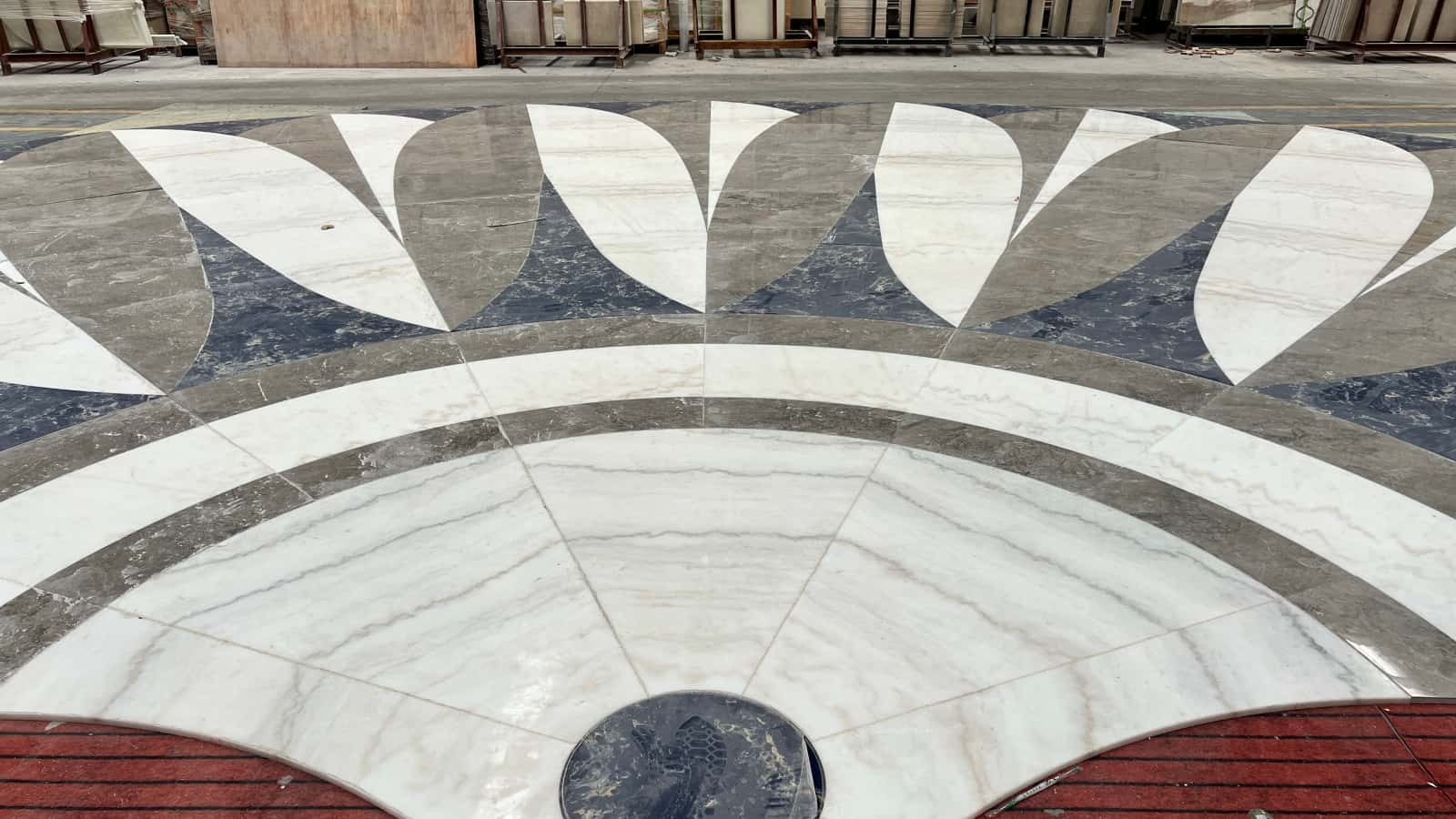
Closer to the inside, curved bands surround fan-shaped stone sections. These smaller, more regular elements give the composition a defined inner structure. The large shaped opening is also visible from above; its dimensions and relationship to adjoining construction need to follow the project drawings.
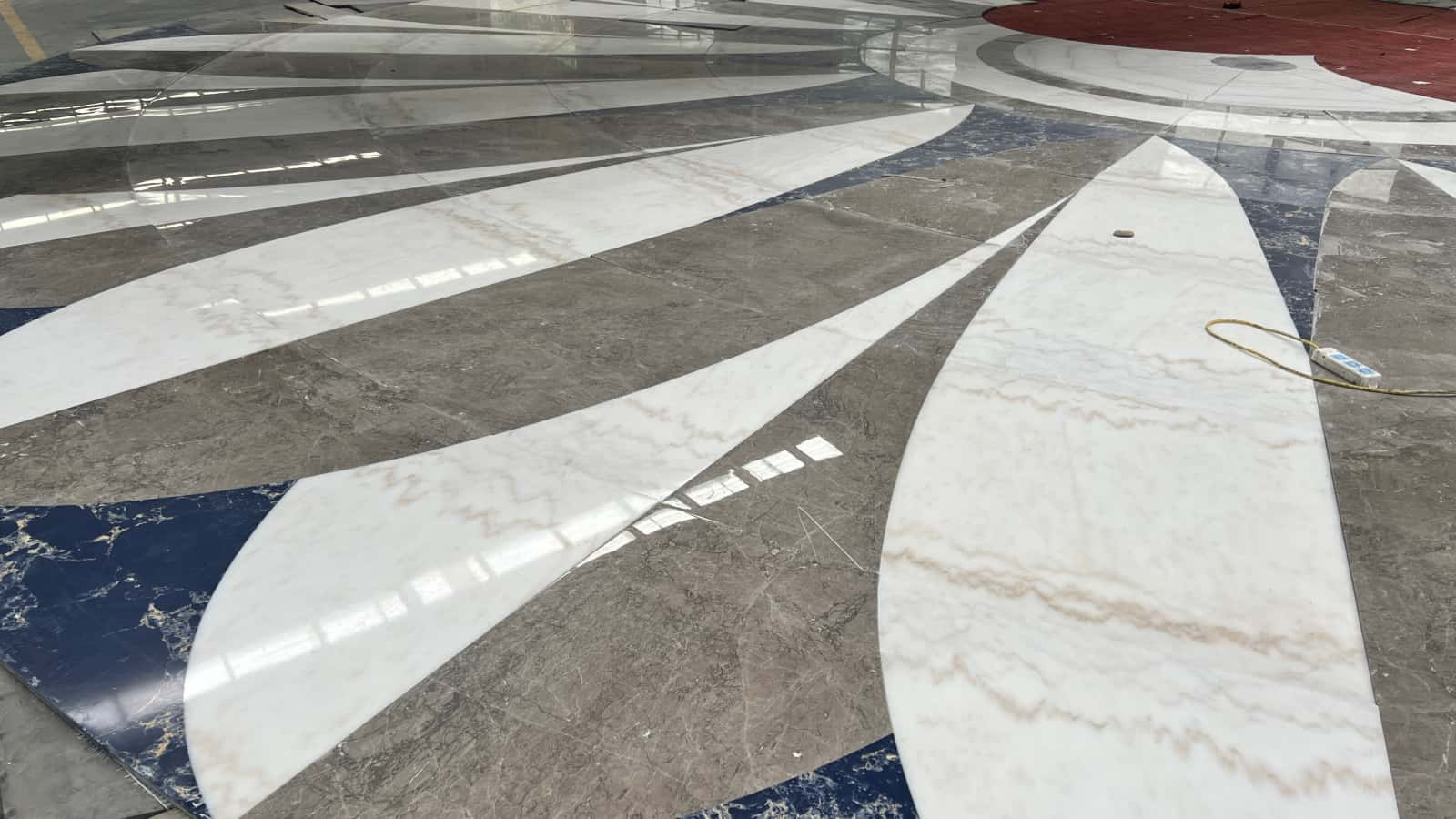
The petal-shaped marble inlay has two levels of detail: the cut outlines establish the overall pattern, while the stone veining adds variation within each piece. Material selection should therefore consider both the complete composition and the appearance of neighbouring sections.
Where the fabrication details become visible
The close views show curved interfaces between contrasting stones. Each convex edge has to meet a corresponding concave edge. When reviewing a similar design, inspect the narrow tips, changes in curve direction and points where several pieces meet.
Some long petal-like shapes also contain transverse panel joints. A single visual motif can therefore consist of several fabricated pieces. The cutting layout should make those divisions clear, so the buyer and installer understand where joints will appear in the finished floor.
Waterjet cutting can produce detailed stone shapes, but joint quality also depends on the actual material and cutting setup. Kerf width, cutting taper and edge condition should be checked through representative cuts and trial fitting. A machine specification alone does not establish the fit of the assembled patterns.
What a marble inlay dry lay helps you review
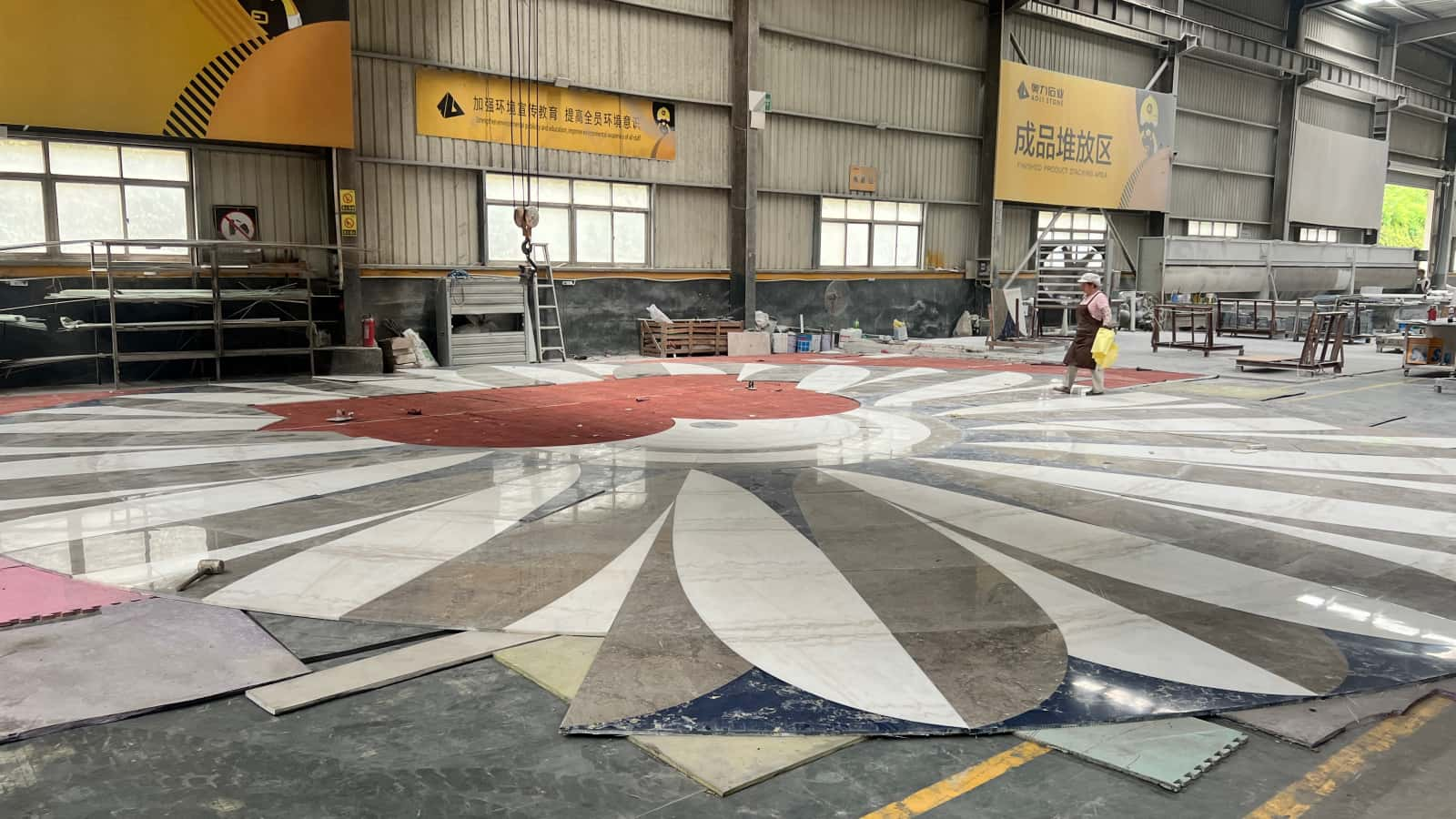
For decorative marble flooring, a dry lay brings individual pieces together before permanent installation. It gives the project team a practical view of the pattern, colour distribution and joint positions. The layout can then be compared with the approved drawing and material samples.
| Review point | What the buyer should check |
|---|---|
| Overall geometry | Compare the outer profile, inner bands and shaped opening with the dimensioned drawing. |
| Curved interfaces | Inspect tips, junctions and changes in direction for fit and visible edge damage. |
| Colour and veining | Review neighbouring pieces together under reasonably consistent lighting. |
| Panel divisions | Confirm that the visible joints correspond to the agreed fabrication layout. |
| Installation reference | Agree how piece identification and layout records will preserve the reviewed arrangement. |
The factory photographs provide useful visual evidence of this layout. Dimensional approval and checks for adjacent surface height differences require measurements against agreed tolerances. Reflections in a polished surface are not a substitute for those checks.
Keeping the reviewed layout clear for installation
Before shipment is approved, agree which records the site team needs: a dimensioned layout, piece identification, orientation marks, joint requirements and a packing list linked to the layout. Numbering and packing arrangements should be confirmed in the supply scope.
The installation team also needs the final floor levels and details for transitions to surrounding finishes. Where future replacement is a concern, discuss spare pieces or retained material during project planning. The appropriate provision depends on the stone selection and the design.
Preparing a brief for a similar floor inlay
For a custom marble waterjet project, a reference image helps explain the intended appearance. A dimensioned plan makes the fabrication discussion more useful. Send Aoli Stone:
These inputs allow the material selection, panel divisions and supply requirements to be reviewed together. For a different space, the pattern should be checked against the actual floor geometry before production is agreed.
Buyer questions
Is this floor inlay made from one slab?
No. The photographs show an assembly of individual stone pieces. Some petal-like motifs contain additional panel joints, which should be shown in the agreed layout.
Can this pattern be adapted to another floor plan?
Aoli Stone can review a proposed adaptation from your drawings. Overall proportions, openings, panel sizes and narrow details need to be assessed for the new dimensions and selected materials.
What affects the quotation?
The stone selection, thickness, overall dimensions, number of pieces, cutting complexity, finish, dry-lay requirements, packing and destination all affect the scope. A drawing-based quotation is more useful than a square-metre price without the pattern details.
Does this case show the installed floor?
This photo set documents the factory dry lay before installation. Use it to review the fabrication layout and visible details; request installation photographs separately if you need evidence of the completed interior.
Discuss your marble floor inlay with Aoli Stone
Aoli Stone supports international buyers with custom stone fabrication and project supply. Send your floor plan, pattern reference, material preferences, dimensions, thickness, quantity and destination so we can review the fabrication requirements.
For other custom marble floor inlay projects, browse Aoli Stone’s marble project gallery.



 IPv6 الشبكة المدعومة