عربي
عربي English
 Español
 Português
 한국어
한국어

في مشاريع الحجر، غالباً ما يتم التعامل مع الموافقة على العينات باستخفاف شديد.
يطلب المشتري عينات. يرسل المورد عدة قطع. يختار المصمم واحدة منها. ويمضي المشروع قدماً.
يبدو هذا طبيعياً للوهلة الأولى. لكن في مجال توريد الأحجار الطبيعية، لا يقتصر اعتماد العينة على اختيار لون جميل فحسب، بل هو إحدى الخطوات الأولى في إدارة المشروع.
لا تجيب العينة ببساطة على السؤال: "هل تعجبنا هذه المادة؟"
ينبغي لعملية أخذ العينات الجيدة أن تجيب على أسئلة أعمق. هل ستتوافق المادة مع التصميم المقصود؟ هل يستطيع المورد التحكم في نطاق الإنتاج؟ هل التشطيب مناسب للتطبيق؟ هل ينظر كل من المشتري والمورد إلى نفس معيار الجودة؟ هل يمكن تكرار هذه العينة على ألواح أو بلاط أو أسطح مغاسل أو ألواح جدارية أو غيرها من القطع المقطوعة حسب المقاس؟

لا يمكن لعينة صغيرة أن تكشف القصة كاملة
تُعد عينة الحجر مفيدة، ولكن لها حدود.
قد تُظهر قطعة صغيرة اللون، وتشطيب السطح، والخصائص العامة للمادة. لكنها لا تستطيع دائمًا إظهار حركة اللوح بالكامل، أو العروق واسعة النطاق، أو اختلاف الدفعات، أو سلوك الحواف، أو كيف ستبدو المادة بعد التركيب.
وهذا الأمر مهم بشكل خاص بالنسبة للأحجار الطبيعية. رخام طبيعي قد تشمل هذه الخصائص الحركة، والعروق، والغيوم، والأحافير، وتغيرات الألوان، أو اختلاف درجات الخلفية عبر الألواح. قد تُظهر عينة صغيرة جزءًا واحدًا من المادة، ولكن ليس النطاق المرئي الكامل.
بالنسبة للمواد المصنعة هندسيًا مثل رخام صناعي, سطح من حجر الكوارتز، و حجر الترازوعادةً ما يمكن للعينة أن تعطي مؤشراً أفضل على إمكانية التكرار، ولكن يجب على المشترين مع ذلك التأكد من نطاق الدفعة، والتشطيب، والسمك، وحجم النمط، والتطبيق المقصود.
ينبغي أن تحدد الموافقة على العينة نطاقًا مقبولًا
من أكبر المفاهيم الخاطئة في شراء الأحجار هو توقع أن تمثل عينة واحدة كل قطعة بشكل مثالي.
هذا ليس واقعياً، خاصة بالنسبة للمواد الطبيعية.
والنهج الأفضل هو تحديد نطاق مقبول.
بالنسبة للرخام الطبيعي، قد يشمل ذلك نطاق لون الخلفية، وكثافة العروق، واتجاه الحركة، والضبابية، وطبيعة البلورات، والاختلاف الطبيعي المقبول، والمناطق غير المناسبة التي يجب تجنبها إذا لزم الأمر.
بالنسبة للكوارتز أو الرخام الصناعي أو الترازو، قد يشمل ذلك اتساق اللون الأساسي، وتوزيع الجسيمات أو الركام، وتكرار النمط، ومستوى تشطيب السطح، وتفاوت السماكة، وجودة الحواف، وتوقعات القطع.
لا ينبغي أن يكون السؤال فقط: "هل هذه العينة معتمدة؟"
السؤال الأفضل هو: "ما هو نطاق المواد التي يشملها هذا الترخيص؟"

الموافقة على التشطيب لا تقل أهمية عن الموافقة على اللون.
يركز العديد من المشترين بشكل كبير على اللون وينسون اللمسة النهائية.
هذا خطأ.
قد يختلف ملمس نفس المادة اختلافًا كبيرًا باختلاف نوع التشطيب. فالتشطيبات المصقولة، أو المصقولة بالفرشاة، أو ذات المظهر الجلدي، أو المعالجة بالرمل، أو غيرها من المعالجات السطحية، يمكن أن تغير درجة اللون، والانعكاس، والملمس، وسهولة الانزلاق، ومتطلبات التنظيف، والجو الداخلي النهائي.
بالنسبة للأرضيات التجارية، لا يؤثر التشطيب على المظهر فحسب، بل على الاستخدام العملي أيضاً. بالنسبة لأسطح المغاسل، يؤثر التشطيب على سهولة التنظيف والاستخدام اليومي. بالنسبة لألواح الجدران، يؤثر التشطيب على انعكاس الضوء. بالنسبة للسلالم، يؤثر التشطيب على كل من المظهر ومتطلبات السلامة.
يجب أن يسجل اعتماد العينة بوضوح نوع التشطيب، وليس فقط اسم المادة.
ينبغي مراجعة العينات تحت إضاءة واقعية
يتأثر الحجر بالضوء.
قد تبدو عينة الرخام مختلفةً عند رؤيتها تحت ضوء النهار الساطع في حمام فندق. وقد تبدو عينة الكوارتز أكثر دفئًا عند رؤيتها تحت إضاءة مكتبية باردة في مطبخ منزلي. أما عينة الترازو المعروضة على طاولة في صالة عرض، فقد تبدو أكثر ازدحامًا عند تكرارها على مساحة أرضية واسعة.
بالنسبة للمشاريع الجادة، ينبغي مراجعة العينات في ظل ظروف إضاءة قريبة من ظروف التطبيق النهائي كلما أمكن ذلك.
تحدث العديد من النزاعات المتعلقة بالمواد لأن الناس وافقوا على عينة في حالة معينة وقاموا بتركيبها في حالة أخرى.
يجب أن ترتبط الموافقة على العينة بالطلب
لا يمكن الموافقة على عينة بمعزل عن غيرها.
قد تكون المادة نفسها مناسبة لتطبيق ما، وغير مناسبة لتطبيق آخر. فالرخام المزخرف قد يكون ممتازًا لجدار مميز، ولكنه أقل ملاءمة للأرضيات ذات الحركة الكثيفة. وقد يكون الرخام الصناعي الهادئ مناسبًا لألواح الجدران التجارية المتكررة، ولكن قد يلزم استخدام تشطيب مختلف للأرضيات. أما الكوارتز، فقد يكون مناسبًا لأسطح المطابخ والحمامات، ولكن لا يزال يتعين التأكد من تفاصيل القطع والحواف.
التطبيق ينبغي أن يسترشد هذا الأمر بعملية الموافقة.
بالنسبة للطلبات التي تتطلب قصّاً حسب المقاس، يجب أن تتطابق العينات مع تفاصيل التصنيع.
بالنسبة للأحجار المقطوعة حسب المقاس، لا ينبغي أن تتوقف الموافقة على العينة عند السطح.
ينبغي على المشتري والمورد مناقشة كيفية تصرف المادة المعتمدة أثناء التصنيع. قد يشمل ذلك شكل الحواف، والسماكة، والتفاوتات المسموح بها، وفتحات الأحواض، وفتحات الصنابير، وحواف الدرج، وتصميم ألواح الجدران، وتطابق الألوان، واتجاه العروق، وحجم البلاط، وتصميم الوصلات، وحماية الأسطح، وتسلسل التعبئة.
هنا تبرز أهمية خبرة المورد.
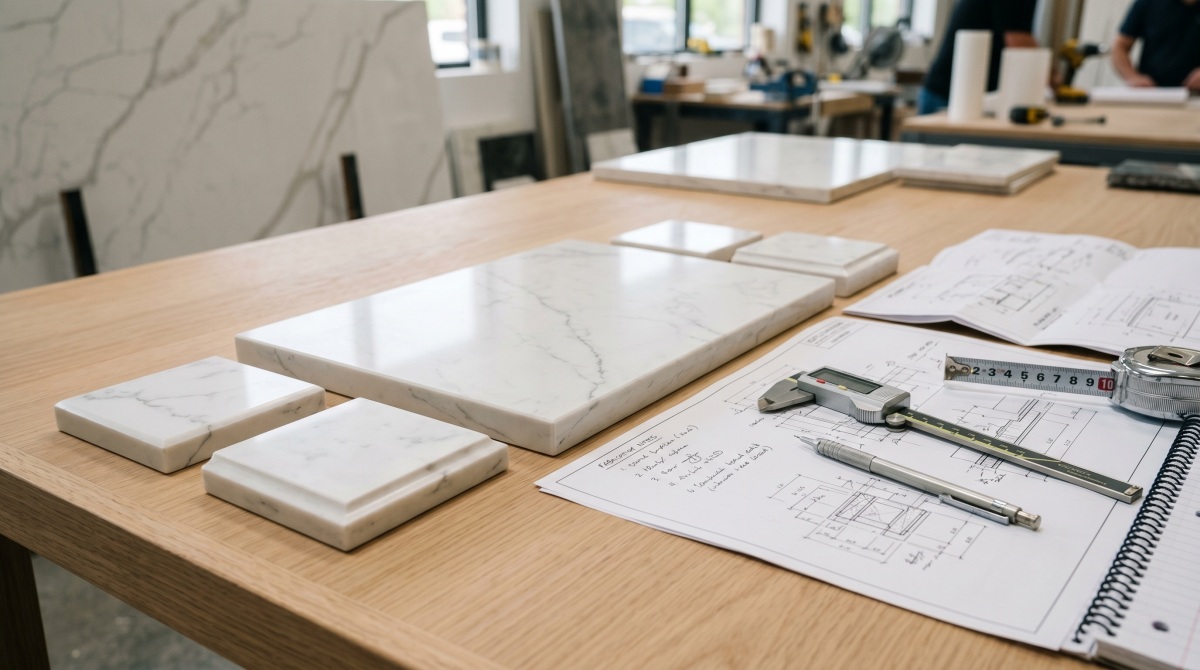
توثيق العينات يجعل الموافقة عليها أكثر موثوقية
الموافقة اللفظية ضعيفة.
بالنسبة لطلبات المشاريع الجادة، يجب توثيق الموافقة على العينات. قد يتضمن سجل الموافقة العملي اسم المادة، وصور العينات، والتشطيب، والسماكة، والنطاق المعتمد، والتطبيق المقصود، واسم المشروع أو مساحته، وتاريخ الموافقة، وتعليقات المشتري، والقيود الخاصة، وملاحظات المورد، والإشارة إلى صور الألواح أو دفعة الإنتاج عند الاقتضاء.
تحمي هذه الوثائق كلا الطرفين. فهي تساعد المشتري على تذكر ما تمت الموافقة عليه، وتساعد المورد على التحكم في الإنتاج، وتساعد المصمم على شرح القرار، وتساعد المقاول على تجنب أي لبس في موقع العمل.
بالنسبة للمشاريع التي تتطلب شهادات أو تقارير اختبار أو وثائق متعلقة بالتصدير، ينبغي على المشترين أيضًا مراجعة الوثائق المتاحة. شهادات الأحجار ويمكن تنزيل المستندات قبل الطلب النهائي.
لا ينبغي أن تتجاهل الموافقة على العينات توقيت الدفعة والإنتاج.
في مجال توريد الأحجار، التوقيت مهم.
بالنسبة للأحجار الطبيعية، قد تختلف الكتل والألواح من دفعات إنتاج مختلفة. أما بالنسبة للأحجار المصنعة، فقد تظهر اختلافات طفيفة بين دفعات الإنتاج تبعاً للمادة، أو التركيبة، أو الركام، أو الصبغة، أو معالجة السطح.
إذا تمت الموافقة على عينة ولكن تم تقديم الطلب بعد أشهر، فيجب على المشتري التأكد مما إذا كانت نفس مجموعة المواد لا تزال متاحة.
أفضل عملية لأخذ العينات تبني الثقة قبل الطلب
لا تقتصر عملية أخذ العينات الجيدة على مساعدة المشترين في اختيار المواد فحسب، بل إنها تُظهر أيضاً كيفية تواصل المورد.
هل يشرح المورّد الاختلافات بصدق؟ هل يسأل عن مكان استخدام المواد؟ هل يقدّم صوراً واقعية؟ هل يتجنّب المبالغة في الوعود؟ هل يناقش التشطيب والسماكة والتصنيع والتعبئة؟ هل يحتفظ بسجلات؟
تكشف هذه التفاصيل عن أسلوب عمل المورد قبل بدء المشروع.
الخلاصة
لا ينبغي التعامل مع الموافقة على عينة الحجر كخطوة إدارية بسيطة.
إنها نقطة تحكم عملية تربط بين نية التصميم، والواقع المادي، ونطاق الإنتاج، والتشطيب، والتصنيع، والتوثيق، وتسليم المشروع.
يمكن للعينة الجيدة أن تبعث على الثقة. كما أن عملية الموافقة على العينات المُدارة بشكل جيد يمكن أن تقلل من المخاطر.
بالنسبة لمشتري المشاريع، لا يقتصر الهدف على اختيار مادة جميلة فحسب، بل يهدف أيضاً إلى الموافقة على مادة يمكن توريدها وتصنيعها وتوصيلها وتركيبها وقبولها بأقل قدر من المفاجآت.
هذه هي القيمة الحقيقية للموافقة على العينات في توريد مشاريع الأحجار.
تواصل مع أولي ستون للحصول على عينات من الحجر ودعم توريد المشروع.



 IPv6 الشبكة المدعومة